
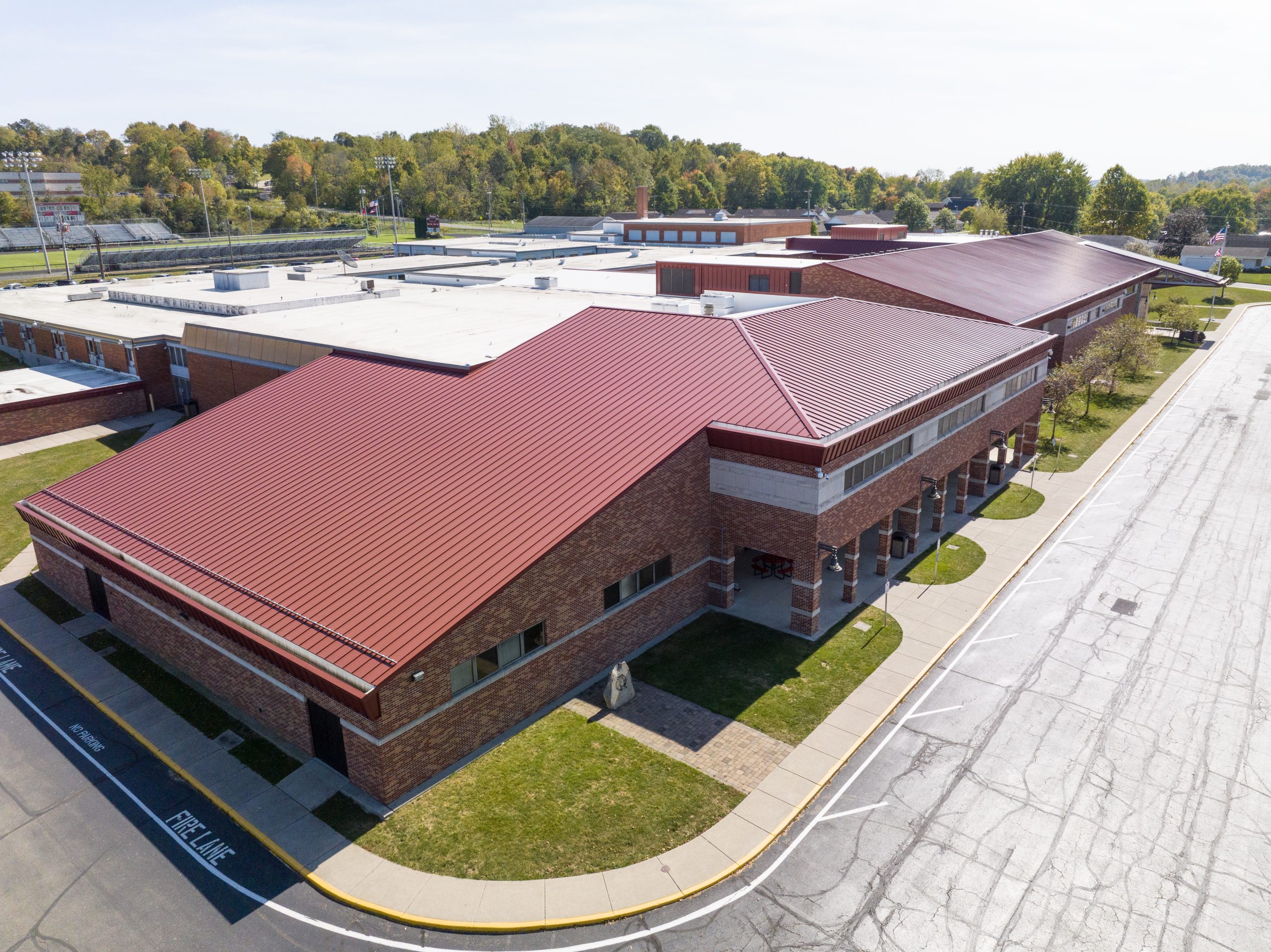
By: Jami Spice, Architectural Business Development, EXCEPTIONAL Metals &
David Martin, Director of Metal Business Development, EXCEPTIONAL Metals
The roof is no longer viewed as a mere “weather cap” but as a critical, high-performance component of the building envelope. As owners, designers and contractors pursue net-zero energy targets and life cycle cost analysis, metal roofing has emerged as the definitive standard. By utilizing EXCEPTIONAL Metals’ full-system approach, professionals can bridge the gap between architectural vision, long-term sustainability and superior building envelope performance.
The Environmental Toll of the Status Quo
Traditional steep-slope roofing materials carry a significant environmental burden. According to the Environmental Protection Agency, roofing materials account for millions of tons of construction and demolition debris annually, with asphalt shingle tear-offs contributing an estimated 11 million tons per year.[1] Additional material waste is generated through installation scrap and manufacturing processes.[2]
By contrast, metal roofing systems are fully recyclable at the end of their service life. Steel and aluminum panels can be reclaimed and reintroduced into the manufacturing stream, supporting circular material practices. Properly engineered and installed metal roofing systems commonly provide service lives of 40 to 60 years, depending on the environment and proper maintenance.
EXCEPTIONAL Metals systems are designed with longevity and recyclability in mind, reducing replacement frequency and minimizing long-term environmental impact.
Passive First: A Smarter Path to Net-Zero
Achieving net-zero energy performance requires reducing energy demand before adding renewable generation. This “passive first” strategy prioritizes envelope performance.
To achieve net-zero goals — where a building produces as much energy as it consumes — the “passive first” hierarchy should be prioritized.
- Thermal Reflectance and Solar Control: Metal roofing systems with high-performance PVDF coatings can achieve high solar reflectance values. When tested in accordance with ASTM E1980, these systems can reach high Solar Reflectance Index (SRI) values, which may reduce rooftop surface temperatures and cooling loads in certain climate zones.[3][5]
Additionally, research published by the EPA and national laboratories, including Oak Ridge National Laboratory and Lawrence Berkeley National Laboratory, demonstrates cool roofing technologies can lower peak cooling demand and improve energy efficiency in appropriate applications.[3][4] - Certification and Compliance: High SRI roof assemblies may contribute to LEED® v4.1 and emerging v5 credits related to Heat Island Reduction and optimized energy performance, depending on overall project design and documentation requirements.
- Systemic Integrity: Envelope efficiency is determined not only by panel performance but by detailing. EXCEPTIONAL Metals focuses on the interface details, providing factory-fabricated trims and underlayments that help reduce thermal bridging — the silent “energy leaks” often found at roof edges and transitions.
Life Cycle Cost Analysis: Shifting the Value Conversation
While metal roofing systems typically carry a higher initial investment than asphalt-based systems, life cycle cost analysis shifts the evaluation from first cost to total cost of ownership.
ASTM E917 provides a standardized methodology for measuring building-related economic performance over time.[5] When evaluated over a 40- to 50-year period, metal roofing systems often demonstrate measurable advantages:
- Reduced replacement cycles
- Lower disposal costs
- Potential energy savings in appropriate climates
- Reduced maintenance frequency
- Retained scrap value at end of service life
Additionally, many metal roofing assemblies achieve Class A fire ratings and may qualify for Class 4 impact resistance ratings when tested under UL 2218. These classifications may influence risk assessment and insurance considerations, depending on jurisdiction and insurer policy.
Vertical Integration: A Risk Mitigation Strategy
The primary failure points in roofing are almost always traced back to poor detailing or inconsistent materials. EXCEPTIONAL Metals helps mitigate these risks through a vertically integrated manufacturing model. By providing every necessary trim and accessory factory-fabricated, it ensures systems are engineered to meet aesthetic requirements and the documented safety required by building standards.
EXCEPTIONAL Metals acts as a technical extension of the project team. By submitting blueprints to its in-house technical staff, contractors receive material counts that minimize jobsite waste. From custom detail drafting to on-site inspections by dedicated Quality Control technicians, every step is designed to validate manufacturer standards — a prerequisite for the industry-leading Single Source™ Weathertightness Warranty.
Beyond the Horizon
Choosing an EXCEPTIONAL Metals system is more than a procurement decision; it is an investment in structural permanence. By merging high-performance materials with rigorous in-house engineering and a “cradle-to-cradle” environmental philosophy, EXCEPTIONAL Metals allows professionals to design and install roofs that do more than just endure the elements — they protect the future.
Technical Resource Guide: Partnering with EXCEPTIONAL Metals
To ensure your next project achieves the performance and sustainability goals outlined in this article, leverage the following in-house services provided by EXCEPTIONAL Metals:
- Estimating & Takeoff Services
Accurate material counts are the foundation of a profitable project. For a comprehensive takeoff, including panels, custom trims and accessories:- Email: em.estimating@amrize.com or estimating@exceptionalmetals.com
- Submission Tip: Attach your architectural drawings (PDF or CAD) for the most accurate quote.
- Engineering & Design Support
From custom transition details to code compliance (ES-1) verification, the Engineering Services team provides “concept-to-completion” support.- Phone: 866.337.4599
- Support Areas: Custom drafting, wind-uplift calculations and thermal bridging solutions.
- Quality Control & Warranty Inspections
The Single Source™ Weathertightness Warranty requires manufacturer-led inspections. Contact the technical team to schedule your jobsite visits:- Phone: 866.337.4599
- General Inquiries: info@exceptionalmetals.com
- Digital Resources
- Color Visualizer: https://exceptionalmetals.renoworks.com/
- Product Specifications: Detailed CSI 3-part specs are available for download on the official website product pages.
Project Intake Quick-Check
Before reaching out for a takeoff request, ensure you have the following information ready:
- Project Location (Critical for wind-load and snow-load calculations)
- Roof Slope (Determines which panel profile is most appropriate)
- Substrate Type (Wood, metal deck, or over existing material)
- Warranty Requirements (Standard vs. Single Source™)
Article Sources
[1] U.S. Environmental Protection Agency. Sustainable Materials Management: Construction and Demolition Materials.
https://www.epa.gov/smm/sustainable-management-construction-and-demolition-materials
[2] General Kinematics. The Asphalt Shingle Recycling Process.
https://www.generalkinematics.com/blog/asphalt-shingle-recycling-process
[3] U.S. Environmental Protection Agency. Estimating the Effect of Using Cool Coatings on Energy Loads and Thermal Comfort.
[4] Oak Ridge National Laboratory; Lawrence Berkeley National Laboratory. Research on Cool Roofing and Energy Performance.
[5] ASTM International. ASTM E1980 Standard Practice for Calculating Solar Reflectance Index of Horizontal and Low-Sloped Opaque Surfaces.
https://store.astm.org/e1980-11r19.html
[6] ASTM International. ASTM E917 Standard Practice for Measuring Life-Cycle Costs of Buildings and Building Systems.